Translate

Showing posts with label Apple. Show all posts

Tuesday, February 12, 2013

Cheap Version Of Iphone Coming this June and would be called as iPhone mini or iPhone air

Apple's low cost iPhone which will be expected to be launched in June would be called as iPhone mini or iPhone Air According to Topeka Capital.The cheaper iPhone is mainly targeted to developing markets such as Brazil,Russia,China,India and South Africa or where the new growth opportunities are there.


The cheaper iPhone would be lighter in weight due to its plastic body and the price of the cheap iPhone will be around $250-$350 which is almost 50% lower than that of current iPhone 16GB model.This price would be really competitive as Chinese and Indian Smartphone manufacturers like Xiaomi,Micromax,Karbonn And Lava provide high end phone experience at the prices of mid range phones.

Apple which is known for generating too much profit margins from its iPhone (approximately $300 from each iPhone) ,its profit margins would be reduced in the upcoming cheap plastic iphone.The cost of the production cheap iPhone would be around $180-$200.

No doubt,Apple's entry to low end market increases its sales volume but with the development of low cost iPhone the status of company would be declined which is known for generating huge profit margins from its products.


Tuesday, December 18, 2012

Amazon Kindle Smartphone with a price tag of $100-$200 will be released in the mid of 2013

According to Taiwanese media reports Amazon will launch its Kindle smartphone between the second and third quarter of 2013.


The phone will be manufactured by foxconn international holdings Ltd. and Amazon have ordered 5 million units.The device will be launched at the price tag of $100-$200.

The phone will likely run a highly customized version of Android,which will support Amazon Services too

The same news sources also confirmed that the New Amazon kindle fire will be launched at the third quarter of 2013 which will be manufactured by Quanta Computer inc. and Compel Electronics inc.

As a reminder Amazon was the first company to offer a tablet at $199,which effects the market share of Apple's iPad.

If the price of Kindle Smartphone will be really around $100-$200,then with the help of strong kindle brand this device will surely impact the sales of other Low Budget Android Devices and chinese smartphones.

Source:

Thursday, December 6, 2012

AnoStyle lets you Choose various color options for your iPhone and iPad Mini

If you are getting bored by the same old white and black color in iPhone and iPad mini.There is a solution for those people.


AnoStyle lets you choose various color options for your iPhone and iPad mini.The coloring process is not an ordinary paint service,while the technique used for coloring the phone is known as Anodization.
The anodization technique greatly minimizes the scratching issues and also maintains the durability of colors.

So,just send them your devices and pick your color of choice which includes red, pink, yellow, gold, orange, blue, teal, violet, copper, green, blue steel, or bronze

Company charges $249 for anodizing iPhone 5 and $299 for anodizing iPad mini

Source:

Tuesday, November 27, 2012

Amazon Kindle Phone and Microsoft Surface Phone will launch in the Mid Of 2013

According to Taiwanese Media,Microsoft Surface phone and Amazon Kindle Phone will be launched in the mid of 2013

According to the sources from upstream supply chain of Foxconn international Holding(FIH),the company has received the orders for Amazon Kindle phone and Microsoft Surface phone.
Both Microsoft and Amazon will test the manufacturer with limited volume in the beginning

Foxconn is a taiwanese multinational company which manufactures iPhone, iPad, iPod and playstation 3

Microsoft Surface phone and Amazon Kindle Phone will directly compete with Apple's iphone and High-end android devices

Source:

Saturday, November 24, 2012

LG Display is the Major Supplier Of Panels For Apple iPad Mini

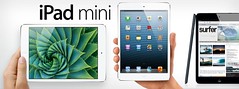
ipad-mini
 (Photo credit: methodshop.com)

According to report by Digitimes,Majority of Panels for the Apple iPad Mini are coming from LG display Because AU optronics Suffer from poor yields in manufacturing 7.9 inch panels for Apple iPad Mini.

While Samsung is not among the major Supplier,which once was the largest supplier Of panels for iDevices.

About 4 million iPad mini screen were shipped in november and LG display was the Major supplier

If the issues in the Manufacturing process of AU Optronics does not reslove then iPad mini shipments for 2012 will drop to 6-8 million units from the estimated 10 million units

And there was also speculation in the market that the next generation or second gen apple iPad mini is likely to introduce in the Second half of 2013 and the device might come with retina display

Tuesday, November 20, 2012

LG-MS870 Actual Image Leaked

LG-MS870 actual image has been leaked.It is a high-end smartphone from LG which will compete Samsung Galaxy S III and Apple iPhone 5


Specifications of phone are:

  1. 1.5Ghz Dual Core MSM8960/8260A Qualcomm SnapDragon S4 Plus Processor
  2. Android 4.0.4 Ice Cream Sandwich
  3. 2150mAh Battery
  4. Supports LTE
  5. Bluetooth 4.0
  6. Supports LAN IEEE 802.11 b / g / n(2.4Ghz)


Wednesday, November 7, 2012

Ipad mini,Kindle Fire HD and Google Nexus 7 Blended By Dr. Mixing


There is no doubt that Apple iPad mini,Google Nexus 7 and Amazon Kindle Fire HD are the best tablets in the market,but Dr. Mixing Tom Dickinson decides to do something different as he blended these tablets in a blender and in the end there's just a lot of smoke and debris


Don't Try this at home

Tuesday, November 6, 2012

Microsoft Surface Costs $599,but costs Microsoft only $284 to Build

According to tech research firm IHS,Microsoft Surface earns higher margin than Apple ipad mini


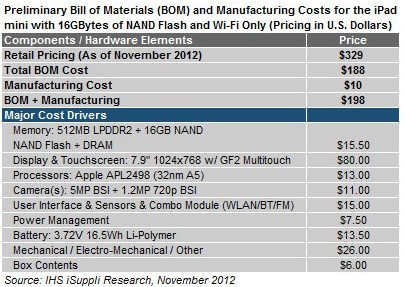
As it turned out, the cost of all the components of the 16-gigabyte version of the iPad mini with a Wi-Fi module is 188 dollars, and 10 dollars worth reassembly. Given the fact that the new product is sold in the U.S. for $ 329, Apple earns her $ 131. Moreover, it is the smallest margin among all variations of tablets. As, for example, a 32 GB version of the difference between the sum of components (+ assembly) and the final cost is 221 dollars, and 64 GB version - 293 dollars.


The most expensive component in the tablet is 7.9-inch display production LG Display and AU Optronics - $ 80 (about 40% of the total cost). It also emerged that the A5 chip in the device is still manufactured by Samsung (worth $ 13).


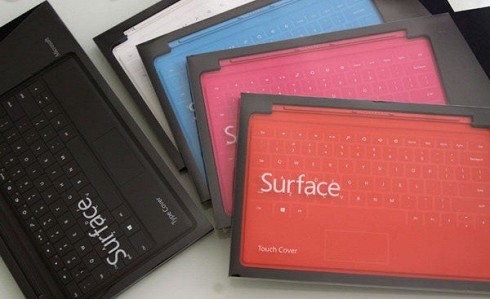
As for the tablet Microsoft Surface RT (32 GB version), here we are dealing with a higher cost - $ 271 for parts plus $ 13 for the assembly, total - $ 284. Thus, Microsoft earns from each drive about 215 dollars (minimum cost tablet - $ 499).


Cost of keyboard Touch Cover, which is bundled with a 599-dollar tablet - only $ 16, that is, in this version of Microsoft margin grows is up to 299 dollars. At 64 GB tablet (worth U.S. $ 699), the software giant to earn even more.

It is clear that in the calculated specialists IHS iSuppli cost not included logistics, advertising and other related expenses, but they are unlikely to have a significant impact on the final cost, so the "scale" of the two American companies profit can be estimated now. 

By the way, the cost of components 16 GB version of the tablet Nexus 7 with Wi-Fi module, IHS iSuppli estimated at $ 159, and the device is now sold for $ 199 , so, Google and ASUS almost nothing to earn it.

Sunday, October 28, 2012

Android - Redefining Yourself


Android is a Linux-based operating system designed primarily for touchscreen mobile devices such as smartphones and tablet computers, developed by Google in conjunction with the Open Handset Alliance. Initially developed by Android Inc, whom Google financially backed and later purchased in 2005,Android was unveiled in 2007 along with the founding of the Open Handset Alliance, a consortium of 86 hardware, software, and telecommunication companies devoted to advancing open standards for mobile devices.
Google releases the Android code.

Android robot.svg
Android Sign

The World’s Most Popular Platform

Millions of people already use Android because it makes your mobile device so much more powerful and useful. On Android, the home screen, web browser, email and everything in between are designed to make your life easier. And because Android is open, you can create a unique mobile experience that’s just right for you.

Widgets


FEATURES

Your stuff, always available, no wires needed

When you sign in to your phone or tablet with Google, you can access all of your Google stuff (contacts, photos, Gmail and more) quickly and easily. You can also enjoy all of your favorite entertainment across your Android devices and even your computer — no wires, no syncing.

Browser

Play everywhere you go


Google Play is the easiest way to enjoy all your favorites — no wires, no hassle, just pure entertainment. You can now read, listen and watch anywhere you want — on your tablet, phone, or in any browser at play.google.com. Forget about cables and syncing: your favorite music, movies, books, apps and games are instantly available across all of your devices and on the web.

Multitasking


Multi-tasking
With Android, you can quickly and seamlessly switch between apps and pick up whatever you were doing. Juggling multiple tasks at once on a mobile device has never been easier.

Notifications


Voice typing and actions
Control your Android device with your voice. Simply touch the microphone on the keyboard and start talking to write emails, SMS, or any other text — more than 30 languages supported. Text appears in real time, so there’s no waiting.
Voice
Photos and videos
Capture special moments with great photos and videos, explore your shots and quickly share your favorites in any way that you want.
Photos

Courtesy: Google Inc.
Regards,
Pankaj Goyal 
Stay Tuned...


Friday, October 26, 2012

Apple MacBook Pro with Retina Display


Apple used the WWDC keynote to announce more details of Mountain Lion - the next version of its Mac operating system, which is released next month - and iOS 6, the latest update to the operating system that powers the iPhone, iPad and iPod touch. But the most groundbreaking announcement was the new MacBook Pro with a 'Retina' display.
What WWDC demonstrated was how, after several years of rapid expansion into new product areas, Apple’s products are now starting to come together again. Mountain Lion and iOS 6 share plenty of features, particularly the iCloud integration that allows content to flow freely from, say, smartphone to laptop.
Meanwhile, Apple’s MacBooks are starting to show the influence of iOS devices in numerous ways, whether it’s gesture controls on trackpads, high resolution displays or the fact that the computers are more likely to be sealed units, not upgradeable by users once they leave the shop.
Phil Schiller, Apple's product marketing chief, unveils the new MacBook Pro at WWDC in San Francisco.
Phil Schiller, Apple's product marketing chief, unveils the new MacBook Pro 
Apple is not the first to do these things but it is doing them with an elegance and simplicity that many of its competitors struggle to imitate.
The screen on Apple's new flagship laptop, the MacBook Pro with Retina display, has to be seen to be believed. At 2880 x 1800 pixels, it can deliver double the screen resolution of the previous MacBook Pro and the difference is like putting on a pair of glasses for the first time.
Text looks as if it is printed onto the glass and pictures are extraordinarily sharp. There will be plenty who say that you don't need this kind of resolution but once you have tried it, you won't want to give it up.
Photographers and video editors will find the resolution especially useful. The screen can display a full 1080 video image and still have three million pixels to spare, meaning that tasks that used to require a much larger screen are now practical on a laptop of this size.
The screen has fewer reflections than previous models and offers a wide viewing angle. However, many apps will need to be updated to take full advantage of the new resolution and, as with the new iPad, browsing on this machine quickly reveals the low quality of images on most websites.
It is the screen that will grab the headlines but this is a powerful computer too. Its specifications match, and in some areas exceed, those of the standard 15-inch MacBook Pro and yet it is thinner and lighter than the 13-inch model. I've used an 11-inch MacBook Air as my main computer for a year now so this new machine feels like a cinema display sitting in my lap. But it took just a brief comparison with my old 15-inch MacBook Pro to make me realise just how much the machine has slimmed down.
Conversely, after a few hours using the new MacBook Pro, the 11-inch Air then feels impossibly small. Switching between the two machines, as I've been doing for the last couple of days, can be disorientating.
Apple has changed the way it builds its machines in order to make this new slimline Pro possible. The display is built-in to the unibody construction, reducing weight and thickness, while the cooling system uses asymmetrical fans to reduce noise.

Regards, 
Pankaj Goyal
Shared Via: The Telegraph

Monday, October 15, 2012

Apple iPad Mini Prices leaked from MediaMarkt Store

There is no official announcement no official date for iPad Mini, But the device appears in the inventory of Germany's Biggest Retailer MediaMarkt with complete models and pricing information


In their inventory system the iPad mini comes in various capacities and the storage options starts from 8 GB and go all the way upto 64GB.The models comes in both black and white color.
So if the above list in the image is true,then customers have a wide range of options to choose from:


Apple iPad Mini 8 GB Wi-Fi: €249 ($323)
Apple iPad Mini 8 GB Wi-Fi and 3G: €349 ($452)

Apple iPad 16 GB Wi-Fi Mini:€349 ($452)
Apple iPad 16 GB Wi-Fi Mini and 3G: €449 ($582)

 Apple iPad 32 GB Wi-Fi Mini: €449 ($582)
 Apple iPad 32 GB Wi-Fi Mini and 3g: €549 ($711)

Apple iPad 64 GB Wi-Fi Mini: €549 ($711)
Apple iPad 64 GB Wi-Fi Mini and 3G: €649 ($841)

With those prices, it seems that Apple isn’t all that concerned with competing with the Google Nexus 7 directly. The 8GB Nexus 7 only costs $199, remember, and Apple’s cheapest iPad Mini comes it at $323.

As the iPhone creator is keeping all things secret so we can't tell for sure whether these prices are real or not. So,we will still have to wait for the official confirmation from Apple which is rumored to happen on October 23.

Friday, October 12, 2012

Apple patents Biometric sensor,fingerprint technology for its iDevices


Apple was granted a patent for a two-step unlock screen feature that has yet to be implemented.Now with help of using fingerprint, face and eye recogniton one can unlock its device,But this feature is even more than that just to lock or unlock the screen,the feature could also be used in e-commerce transactions from iOS device.For this Apple acquired mobile security firm Authentec for $356 Million,so that the transactions are processed safely and securely .

Apple's latest inventions includes techniques for concealing components of  an electronic device may include a component that is disposed behind a window configured to selectively become transparent or opaque, such as a polymer-dispersed liquid crystal (PLDC) window.Since such a window may be hidden behind a transparent display or color-matched to seamlessly integrate into an enclosure of the electronic device, the components may remain hidden from view while not in use. When desired, the electronic device may expose the concealed components by causing the electronic window to change opacity, allowing the components to suddenly appear as from out of nowhere.

But it seems that the invention is skewed towards device aesthetic appearance as said in the patent file
Current techniques for incorporating components into an electronic device may be limited by the relative sizes of the components and the electronic device. The larger the components and the smaller the electronic device, the less spatial area there may be to incorporate additional components. For example, a small electronic device where a large display covers most of the face of the electronic device may not allow for any additional components, such as a fingerprint reader, to be added to the electronic device. Furthermore, under the current techniques, adding new components may harm the aesthetic appeal of the device by cluttering the electronic device enclosure, even though these additional components may be seldom or never used by many users. An electronic device that incorporates multiple components may lose its aesthetic appeal when covered by visible components, particularly as compared to a seamless electronic device where very few, if any, components of the electronic device are visible.
While Apple's patent FIG. 2 shown below represents an iPhone, Apple states that their new biometric sensor/reader could also be implemented into other idevices
And the Compatible devices are:
iPod touch
iPod nano
iPad Tablet
Macbook


The proposed iPhone features may include windows 24A and 24B configured to conceal components such as a camera and biometric sensor 34. By concealing the biometric sensor behind the iPhone's glass surface the biometric sensor may remain unseen when not in use.

The Fingerprint Reader
In Apple's patent FIGS. 12 and 13 shown below we see a biometric sensor in context with a fingerprint reader which is initially concealed behind a closed window on an iPhone. Upon the iPhone's activation in a locked state, a lock screen 160 may be displayed requesting a user to slide a finger across the display to unlock the device. The electronic device may request user authentication to access the handheld device. The device may then display an instruction screen requesting that a user provide biometric data via their fingerprint which will be read by the fingerprint reader.


The biometric sensor may be exposed by the opening noted below in patent point 166. Upon the verification of the user's identity, their home screen will be revealed.

Face or Eye Recognition for e-Commerce Security

An alternative embodiment Apple's patent FIG. 14 shown below illustrates the iPhone's camera that could be used in the future to obtain face and/or eye recognition as a form of user ID or authentication.


Apple states that user authentication is not limited to unlocking an iDevice. Apple's patent FIG. 15 illustrates the process in an e-commerce context. To complete a shopping transaction online, many e-commerce websites may require identity verification before the order can be completed. When such a transaction occurs using an iPhone, for example, the iPhone's camera will provide an authentication screen 180 explaining that user authentication is required to complete the transaction.

Upon acknowledgement of the authentication screen, the iPhone may open a window to expose a biometric sensor in the form of an illustrated camera lens as shown in the patent figure. Once the user is properly identified, the purchase could be completed

Apple filed the patent application in April 2011, with Felix Jose Alvarez Rivera, Richard Hung Minh Dinh and Scott A Myers credited as its inventors.

Full Patent Details  Via-Patentlyapple

Thursday, October 11, 2012

Apple iPad Mini's Biggest Competitors


The iPad Mini has yet to be officially announced, but it's kind of the worst-kept secret in tech right now. There's a very good chance it'll be revealed later this month (although what its final name will be remains to be seen) and even if you've no plans to purchase it, you'll likely want to know what it has to offer anyway.
The Mini is rumored to sport a 7.85-inch screen at a price of at least $299. But when and if it debuts, it will not enter a vacuous 7-inch tablet market. Its opponents will compete on price, ecosystem, performance, and features. Each offers something unique and Apple's new tablet will have to be an amazing piece of kit to answer the challenge.
Without further lollygagging, let's get to the list.


The most expensive tablet on the list is the only device to include dual cameras, an IR blaster, and microSD storage expansion.
(Credit: Josh Miller/CNET )
Samsung Galaxy Tab 2 7.0
The most expensive tablet on the list also includes the most physical features. Given its IR blaster, dual cameras, and microSD expansion, $249 doesn't look so bad. In performance it's probably the weakest of the five, however. 

The newly upgraded Kindle Fire gets the Fire HD's software features and a price slash to $159.
(Credit: Eric Franklin/CNET )
Kindle Fire (2012)
The 2012 update to 2011's Kindle Fire sports an identical design, but gets a few internal upgrades: twice the RAM, a faster processor, and an update to the latest version of the Kindle Fire OS. It may not seem like much compared with others on the list, until its $159 price smacks you across the face, waking you from your apathetic stupor. 


The Nook HD will sport a higher ppi than either the Nexus 7 or Kindle Fire HD when it debuts in late October or early November.
(Credit: David Carnoy/CNET )
Barnes & Noble Nook HD
It won't be available until later this month, but I got some hands-on time with the new 7-inch Nook HD a few weeks back and was impressed by its redesigned interface, extremely light weight, microSD storage expansion, 1,140x900-pixel-resolution screen, and the inclusion of the fastest processor yet in a 7-inch tablet, the 1.3GHz OMAP 4470. At $199, the Nook HD will clearly make its case. Too small? The 9-inch Nook HD+ debuts at the same time for only $269.


Amazon Prime members and media-consumption hogs need look no further than the beer-reflecting Kindle Fire HD!
(Credit: Josh Miller/CNET )
Kindle Fire HD
If you're an Amazon Prime member with a penchant for watching books, movies, TV shows, and music, the Fire HD should definitely be in your crosshairs. At only $199, the Fire HD sports an amazing-looking screen, a 720p front camera, Bluetooth, and the best speakers you've ever heard on any tablet. If you like what you hear, but still feel 7 inches is too small, the Kindle Fire HD 8.9 (in Wi-Fi and 4G LTE versions) launches on November 20.


The Nexus 7 is currently the ultimate 7-inch power in the universe.
(Credit: Josh Miller/CNET )
Google Nexus 7
The current king of 7-inch tablets wins its crown by offering Tegra 3-induced performance, NFC communication, and the latest version of the Android OS, Jelly Bean. Not to mention its extremely comfortable design and $199 price. The iPad Mini will need to offer a very good features-to-price ratio if it hopes to become the best 7-inch tablet yet.


VIA

Purple Lens Glare in Apple Iphone 5 fixed by New Iphone 5 Cases


At least one accessory maker is hoping to pick up some business with what has been perceived as a shortcoming of the iPhone 5's camera.
Fotodiox, an Illinois-based company, has a new case out called the camHoodie ($24.95) that promises to "greatly reduce purple lens flare."
(Credit: fotodioxpro )

There's no magic behind that claim, just a piece of rubber that acts as a lens hood to keep stray light from coming in. It's held on by a case designed to keep the back and sides of the phone from getting nicked.
The issue in question is a purple color that typically shows up on the edges of photos when a light source is immediately nearby, though can occur even when the light is off frame. It can also affect both photos and videos. Some users began complaining about the issue just after Apple's new phone went on sale last month.
In a support document that went up over the weekend, Apple noted that "most small cameras" exhibit the effect when there's a nearby light source that's out of the frame. As part of a statement, the company said to readjust the camera, or block off light using your hand to get rid of any halos.
Here's the Fotodiox's before shot:
(Credit: fotodioxpro )
And the after, using the camHoodie (which I'm told does not randomly add humans):
(Credit: fotodioxpro )

Friday, October 5, 2012

Waiting for Apple's next big thing

It's been one year since Steve Jobs died and Apple is as strong as ever. Does CEO Tim Cook need another "holy cow" product to keep his company rolling?


Tim Cook with Steve Jobs at Apple headquarters in 2007 (Credit: James Martin/CNET)
Steve Jobs would surely be pleased.
A year after his death, the company he co-founded and brought back from near-ruin is on a tear. With its top executive team still in place, Apple is set to close out its most profitable year ever. Its stock, now up 65 percent for the year, gives Apple a market value far more than Google's and Microsoft's combined. The iPhone 5 is selling at a record pace, and fans continue to line up and even camp out for a chance to be one of the first with a new Apple product.
Now comes the hard part: Maintaining the formula for that wild success. It's CEO Tim Cook's biggest challenge as he moves beyond the keeper of the Jobs flame and puts his own stamp on the company. Jobs once said Apple is the biggest startup on the planet. Despite its more than 70,000 employees and hundreds of millions of customers, Apple's greatest strength has been its ability to reinvent a market, from the iPod to the iPhone to the iPad.
Now, nearly three years since the the iPad was released, longtime Apple watchers are wondering when Apple's next big thing will arrive. Tackling a new market is a must if Apple is going to maintain that historic success. Certainly, it could continue to improve on its main categories for years to come, squeezing profits from a customer base that's the envy of corporate America. But that kind of complacency isn't how Jobs took his company back from the brink in the late '90s. It's simply not an Apple thing to do.
"That's how Apple has done it," said Charlie Wolf, a vice president with research firm Needham and Company who has followed Apple since 1985. "But I can't identify any market that Apple can easily enter and disrupt right now -- that's with Steve Jobs, or without Steve Jobs."
To say that Apple is in trouble, of course, would be silly. But tech industry history buffs know it's when companies are on top that they make the mistakes that cause problems years later. IBM didn't take the PC revolution seriously enough. Sun didn't respond quickly enough to cheap Linux servers. Microsoft missed the boat on phones and tablets, and is still playing catch-up. RIM didn't have a good answer to the iPhone (it still doesn't). The list goes on and on.
Turning markets on their head is what Apple did best under Jobs. That leads to the obvious question: What's the next act in Apple's decade of market disruptions? Is it an Apple TV? Something else? And do Cook and his executive team have what it takes to do it again?
Keeping the band together
We know one thing: Cook has kept top executives from bolting. That includes Jony Ive, Apple's chief of industrial design, who Jobs said in Walter Isaacson's biography was left with "more operational power" at than anyone else at the company.
Cook's team: Jony Ive, Eddy Cue, Scott Forstall, Phil Schiller, Bob Mansfield
(Credit: Apple/CNET )
The band also includes most of Jobs' team since the mid-'90s, including marketing head Phil Schiller, iOS chief Scott Forstall, hardware honcho Bob Mansfield, and Eddy Cue, the man who oversees iTunes and has been a key negotiator the content companies. It helps, of course, that Cook showered them with huge stock packages, but Apple watchers are impressed nonetheless. "Not only have they stayed, but they seem to have renewed enthusiasm," said Jeffrey Sonnenfeld, a senior associate dean at the Yale School of Management.
So the backup band is still in place and we know what they can do. What's not so clear is whether someone can step in and make deals the way Jobs did. The stories of Jobs the mercurial and demanding boss are widely chronicled. But he was also persistent. When Jobs wanted to buy a startup called Siri, for instance, he called CEO Dag Kittlaus 30 times over a span of 35 days to persuade him to sell, according to a former Siri board member. Jobs was successful, and Apple went on to turn the software into the marquee feature of the iPhone 4S.
That was classic Jobs, determined to get his way. Cook, the master of operations, also is clearly driven, but we don't yet know how his Apple will separate from Jobs' Apple on the design of a new product. We don't know how obsessively he will drive to get what he believes is needed done. The iPhone 5 was probably the last product for which Jobs fully applied his obsessive attention to detail. Will Ive fill that role? Will several people?
In the interim, all eyes have been on Cook to see how he handles the pressure. Already, he appears more willing than his old boss to admit an error, and do it faster.
In 2010, users began complaining that the iPhone 4 lost reception when held along its new exterior antenna. Apple stayed quiet on the matter, short of a widely-posted e-mail between Jobs and a customer, with Jobs telling him to "just avoid holding it in that way." The company followed up saying the issue was "just a fact of life for every wireless phone." When the issue persisted, Apple held a press conference at its headquarters where an agitated Jobs offered unhappy buyers a refund, or a free rubber case. That was after a 32-minute presentation pointing out that competing devices experienced the issue too.
Steve Jobs in 2010, during "Antennagate"
Spin forward to last month. When it became clear after the release of the latest iPhone that a homemade replacement for Google maps on iPhones and iPads was flawed, there was no foot-dragging from Cook. He owned up to the mistake.
"At Apple, we strive to make world-class products that deliver the best experience possible to our customers," Cook said in a letter posted on Apple's Web site. "With the launch of our new Maps last week, we fell short on this commitment."
Cook went one step beyond, urging upset customers to try out software from competitors, including Google. It's hard to imagine that moment from Jobs, who told Isaacson that he was "willing to go thermonuclear war" against Google over Android.
Plenty of pundits have argued whether Jobs would have even released that flawed product, but one thing seems indisputable: Jobs was no friend of Google, and Google's refusal to provide turn-by-turn voice navigation for maps, as it does on Android is reportedly what pushed Apple to take on maps itself.
An ability to make a public apology, of course, has little do with with innovating and creating great products. That's the real job of Cook and his core team. And without the autocratic, deal-making Jobs at the helm, there are new challenges. Already, there are reports of infighting and turf battles inside Apple, a company that for the past decade has seemingly moved with a single purpose. And without Jobs' intense influence, can Cook and his well-compensated management team balance their existing lines with the search for the next big thing?
Apple's 'hobby' TV product
Set on TV?
Ever since Jobs told Isaacson that he wanted "to create an integrated television set that is completely easy to use" and that he "finally cracked it," the Apple speculation apparatus has ginned up a series of inconclusive reports. Yes, Apple makes its $99 set top box, but Cook himself still refers to it as a "hobby." Jobs seemed to be referring to a bigger vision. Was Jobs talking about Apple's next billion-dollar opportunity, a complete reinvention of the way people watch TV shows and movies at home? Or something more modest?
Everyone hates the messy interface of most televisions providers, not to mention confusing, button-heavy remote controls. Yet companies like TiVo, which have offered slick alternatives have not produced sweeping changes. Early speculation was that Apple would skip the box game entirely and instead come out with its own TV set, aiming, naturally, to upend the entire TV market in the way it did with the iPhone and hopefully do away with those god-awful remote control buttons.
But there's a big sticking point if Apple really does want to reinvent the TV entertainment experience: the entertainment industry. Two years ago, Jobs was trying to cut deals to for TV shows and movies that it wanted to offer on iTunes for deeply discounted rates. But Jobs ran up against roadblock after roadblock in Hollywood. The studios and TV networks were determined not to end up like the music industry and let Apple grab too much control of their digital distribution. The exception was Disney. He was, after all, the studio's biggest shareholder and a member of its board.
And Jobs managed to cut a personal deal with News Corp. boss Rupert Murdoch: News Corp. won Apple's assistance in launching The Daily, an iPad-focused news app that debuted in February 2011, but has since struggled. In return, Fox signed on, along with Disney, to offer TV shows for rent on iTunes for 99-cents. Up to that point, iTunes sold individual episodes of TV shows for download for as much as $3.99. Ultimately, the 99-cent rentals didn't go far. Disney and Fox were the only majors to participate and the discounted rentals were halted after a year.
Point is, not even the esteemed and respected Jobs could budge the Hollywood poobahs. Now, the task of reinventing TV is left for Cook and Jobs' former deal-making partner, Eddy Cue. "The one who would step in and did a lot of the work is Eddy Cue," said Wolf. "Eddy is good, but nobody's as good as Steve. So consequently, that increases the challenge in trying to obtain content, and Apple may never succeed."
Dealmaker Eddy Cue showing off iTunes 11 at the company's iPhone 5 unveiling last month
(Credit: CNET/James Martin )
Others think Apple still has options to grow in the proverbial living room business.
"I totally don't believe there's a TV set in the works. That makes no sense," said Tim Bajarin, an analyst with Creative Strategies."The real opportunity is the to retrofit TVs, not make TVs. The TV business itself is cutthroat and nobody is making any money."
Instead, Bajarin says Apple should play to its strengths and focus on on-demand content, applications and interactivity. Yes, the stuff that even Jobs had a hard time nailing down.
There are signs Apple's still has sights on the content piece of the puzzle. Last month, Apple tested the waters with live video broadcasting in its month-long iTunes Festival. For the first time, the annual concert was available for both live and on-demand streaming on its current Apple TV set top box. Apple has also become more democratic about allowing potential competitors, like Hulu as apps on the Apple TV. Hulu subscribers can now watch TV shows they might otherwise purchase outright through iTunes.
"There's a lot of people who have gotten rid of the cable system, who only have Roku or Apple TV. That fundamentally suggests a business model that is totally on-demand," Bajarin said.
In the near term, Apple is said to be simply trying to extend its set-top box idea, and turn it into a product with the reach the likes of an iPod, iPhone or iPad. Recent reports from Bloomberg and The Wall Street Journal say Apple is working on something more like a traditional cable box that would include more live content. It could even be offered through cable companies.
Whether you can imagine Apple handing over tech support duties for its hardware to the likes of a Comcast or a Time Warner is, perhaps, beside the point. Those are the current rules, and way of doing business in the TV world. Of course, keep in mind that Apple shattered through similar the "way the phone industry worked" on its way to rolling out the iPhone.
"I've got more confidence in the iPad than the iPhone. I don't think we've even seen what the iPad can do -- it's astonishing - particularly since invading the business market," said Wolf. "That, to me, is the big story."
Will the iPad become Apple's biggest money maker?
So what then should Apple do next -- an iTV, wearable computing, robots? None of the above? More than a few are still beating on a foray into television. Critics may scoff, but remember this is a company that's made a habit of proving it knows its business better than its critics. Not that long ago, plenty of people said Apple stores were a terrible idea and Apple was headed for trouble by trying to compete with tough companies like, ahem, Best Buy and Circuit City.
The original iPod was a clunky thing that couldn't store many songs and were no better than MP3 players on the market, critics scoffed. The iPhone was headed into a crowded market. And the iPad, well, what was the point of a large iPhone without the phone? Jobs & Co. always had the last laugh.
"If someone asked you about your leadership, you'd probably say give me more than 12 months," said Michael Useem, director of the Center for Leadership and Change Management at the Wharton School. "It would be shocking if there was anything significant in a year. But over two or three years, it will be apparent."
Now it's time to see if Cook & Co., whatever it is they do next or even if they stand pat with the current product lineup, get the last laugh, too.